
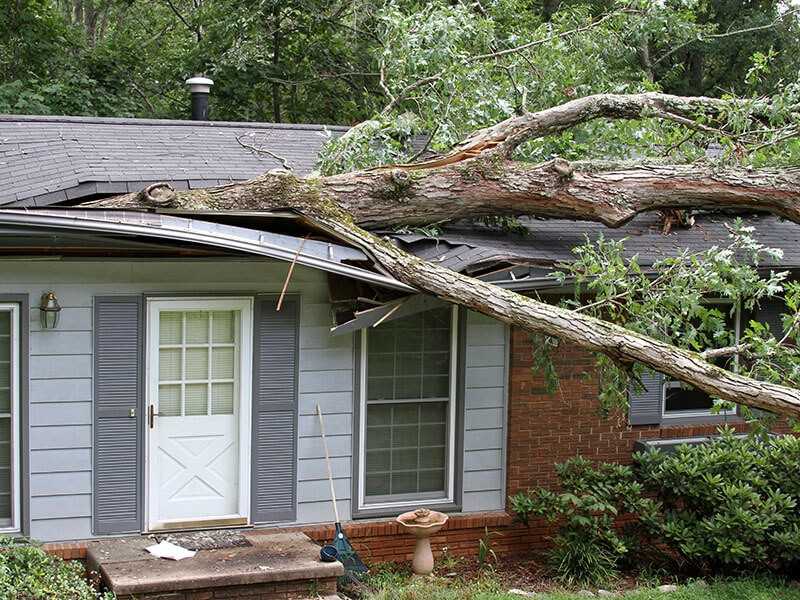
A storm that damages your roof starts a process most homeowners only go through once or twice in a lifetime. Insurance companies handle claims every single day, which puts most people at a real disadvantage from the start. Ohio actually gives policyholders specific legal protections most people never hear about until something goes wrong. This guide walks through the real process for Cincinnati homeowners. That includes the deadlines, the math behind your payout, and the mistakes that cost people money.
What To Do In The First 24 Hours
Safety always comes before paperwork in the first hours after a storm.
Check the property for hazards like downed power lines, exposed nails, or unstable roof sections. Avoid going near the damage until you know it is safe. If water is actively entering the house, cover the opening with a tarp to limit further damage. Insurance policies generally expect reasonable steps to prevent additional loss. A tarp is the simplest way to meet that expectation. Photograph the damage before you touch anything or start cleanup. This is your earliest and most credible evidence of what the storm actually did.
How To Document The Damage Properly
Documentation is the single biggest factor in how smoothly a claim goes.
Photograph every angle of the damage, both close-up shots that show detail and wide shots that show context. Include parts of the roof or siding that were not damaged, for comparison. This helps establish what the storm actually changed. Timestamp everything if your phone supports it, and note the date of the storm itself. Insurers sometimes question whether damage matches a specific weather event. Photograph the inside of the house too, including ceiling stains, wet insulation, or anything affected by a leak. Keep every receipt tied to the damage, including tarps, emergency repairs, or a hotel stay if the home is unsafe.
How To File The Claim And What Happens Next
Filing the claim itself is usually the easiest part of the process.
Call your insurance company or your agent and report the damage. Write down the date, the time, and the name of whoever you spoke with. You will receive a claim number once the report is filed. Keep that number with your documentation, since you will need it for every future conversation. The insurer will typically schedule an adjuster to inspect the property. You can have a roofing contractor present to point out damage that is easy to miss from the ground. You are not required to use any contractor your insurer suggests. Ohio law gives you the right to choose your own contractor.
What Ohio Law Requires Of Your Insurer
Ohio regulates how quickly an insurer has to respond to your claim. Most homeowners never hear these deadlines from their insurance company.
Ohio Administrative Code 3901-1-07 sets specific deadlines for how insurers must handle a claim. The insurer must acknowledge your claim communication within 15 days of receiving it. The investigation must begin within 21 days of that notice. The company also has to send you a list of any forms or documentation it needs within 15 days. That means you are not left guessing what to submit. Ohio law also requires insurers to handle claims in good faith. Delaying, denying, or lowballing a legitimate claim without a real basis can expose the company to penalties. If your insurer misses these deadlines, or your claim feels unfairly handled, you can act on it. The Ohio Department of Insurance Consumer Services Division takes complaints directly at 800-686-1526.
Most Ohio homeowners policies also limit claims to about one year from the date of loss. Waiting does not help your case, and it can hurt it.
Understanding Your Payout, ACV, RCV, And Underinsurance
How much you actually receive depends on a few details most people never think about until the check arrives.
Most Ohio homeowner policies pay on a replacement cost value basis, often shortened to RCV. This covers the full cost of new materials, not a depreciated value. RCV policies almost always pay out in two separate parts. The first check, based on actual cash value, accounts for depreciation and your deductible. Once repairs are complete and you submit proof, the insurer releases the remaining depreciation as a second payment. Underinsurance is the detail that catches the most people off guard, according to the Ohio Department of Insurance’s homeowners guide. Insurers usually require coverage equal to about 80 percent of your home’s replacement value. If your policy covers less than that minimum, the company pays the same reduced percentage on any claim. A homeowner covered at only 75 percent of that minimum gets 75 percent of the bill, and pays the rest themselves. The exact numbers vary by policy, so reviewing your own coverage limits before a storm hits is worth the time.
Mistakes That Can Cost You
A few avoidable mistakes account for most of the frustration homeowners have with this process.
- Waiting too long to file. Documentation gets harder to connect to a storm the longer you wait, and Ohio policies cap how long you have.
- Accepting the first offer without question. The initial estimate is a starting point. You can request a re-inspection if you find more damage later.
- Hiring a contractor who showed up uninvited right after the storm. These are sometimes called storm chasers, and they often leave town before warranty work is needed.
- Letting a contractor offer to waive or pay your deductible. This sounds generous, but it is insurance fraud in Ohio, and a legitimate contractor will not offer it.
- Skipping your own documentation because the adjuster is coming. Adjusters move quickly and do not always catch everything, so your own photos still matter.
When To Bring In A Roofing Contractor
A roofing contractor cannot approve your claim, but the right one makes the whole process easier.
Only the insurance adjuster can approve a claim, and no contractor can promise otherwise. What a good contractor can do is document damage thoroughly and write an estimate the adjuster can actually work from. They can also meet the adjuster on-site to point out anything easy to miss from the ground. Madewell Roofing and Exteriors already does exactly this for commercial properties across Cincinnati. The team documents damage and meets with adjusters directly. The same approach applies to a storm-damaged home. A free inspection gives you photos and a written assessment before you even file the claim. That means you walk into the process already prepared, not starting from zero. If the damage needs a full roof replacement rather than a repair, that conversation happens during the same inspection.
Schedule a free roof inspection from Madewell Roofing and Exteriors before you file. You will have documentation and a professional estimate ready when the adjuster arrives.



0 Comments